
Marine Institute combines ecological and economic science to support Ireland’s fisheries and marine biodiversity
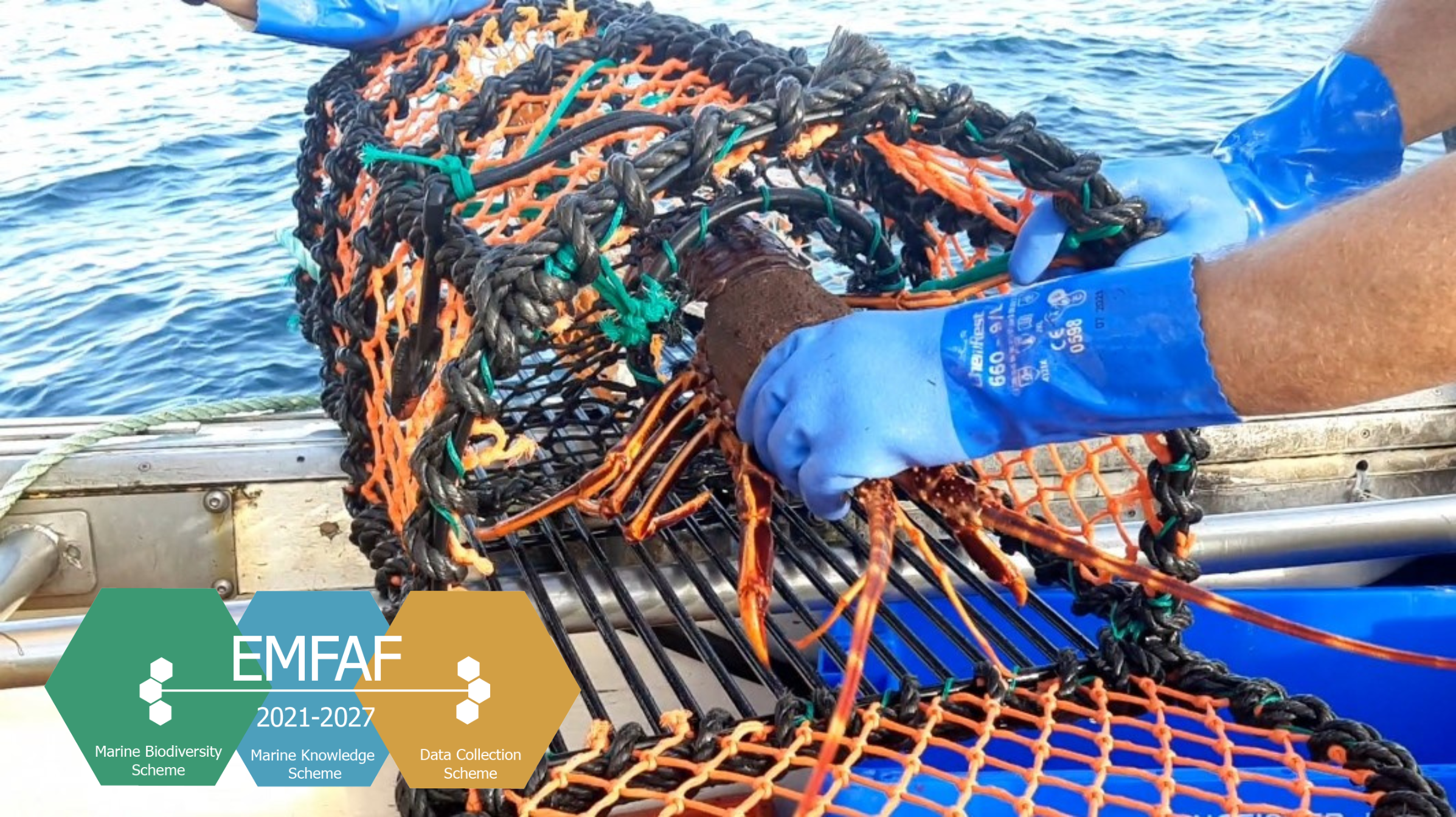
More than 170 researchers, policymakers, industry representatives and stakeholders representing over 40 organisations gathered for the Marine Institute's EMFAF Annual Webinar 2026 to explore how science, technology and innovation are helping to secure the sustainable future of Ireland's marine resources.
The EMFAF (European Maritime, Aquaculture and Fisheries Fund) runs from 2021 to 2027 and supports the EU common fisheries policy (CFP), the EU maritime policy and the EU agenda for international ocean governance.
The webinar showcased projects supported through EMFAF, highlighting how investments in marine biodiversity, fisheries data collection and marine knowledge are delivering practical solutions for sustainable fisheries management, biodiversity conservation and climate resilience.
A key focus of the event was the Management of the Crayfish Fishery to Protect Critically Endangered Species Project, one of Ireland's designated Operations of Strategic Importance. The project is developing a management approach for the crayfish fishery that protects this critically endangered species while transitioning to low-impact, economically viable fishing practices.
Speaking about the project, Russell Poole, Senior Fisheries Biologist at the Marine Institute who chaired the webinar, said: "By combining ecological research with socio-economic analysis, we are developing management measures that can protect vulnerable species while supporting a sustainable future for the fishery."
Research presented by Sara Palma Pedraza, Research Scientist with the Marine Institute, explored the use of acoustic telemetry to track the movement and behaviour of skates and rays in Tralee Bay and how this technology can support bycatch management in the crayfish fishery.
Complementing these insights, Oliver Tully, Fisheries Scientist with the Marine Institute, presented research examining the economic implications of transitioning towards lower-impact fishing practices for the crayfish fishery, helping to ensure that environmental sustainability and fishing livelihoods can be considered together in future management measures.
The webinar also highlighted the critical role of high-quality fisheries data in supporting evidence-based decision-making and management of marine resources. Diarmuid Ryan of Inland Fisheries Ireland presented an overview of the Irish Marine Recreational Angling Survey (IMREC) sampling programme, which strengthens fisheries data collection and is funded through the EMFAF Data Collection Scheme.
Dr Ciaran Kelly, Director of Fisheries Ecosystems Advisory Services (FEAS) at the Marine Institute, commented: "High-quality fisheries data is fundamental to evidence-based decision-making. Through the Data Collection Scheme, recognised as an EMFAF Operation of Strategic Importance, EMFAF funding enables the collection of biological, environmental and socio-economic information that supports scientific advice and helps ensure the sustainable management of Ireland's fisheries and aquaculture sectors."
Participants also heard how EMFAF investment is enhancing Ireland's marine knowledge infrastructure and climate services. Presentations showcased the establishment of a Reference Laboratory for Marine Biogeochemistry Essential Climate Variables, Ocean Climate Sentinel Sites, the Konnect data platforms, remote sensing applications for aquaculture, and the development of climate projection and decision-support tools.
Falling under the Marine Knowledge Scheme, these activities are also recognised as an EMFAF Operation of Strategic Importance for its role in improving the coordination, processing, sharing and accessibility of marine and climate data. These activities support the implementation of national and international environmental obligations while providing critical information for marine planning and climate adaptation.
The projects featured during the webinar demonstrate the strategic impact of EMFAF investment in Ireland's marine sector. Together, the Crayfish Project, Marine Knowledge Scheme and Data Collection Scheme contribute to stronger marine governance, enhanced biodiversity protection, sustainable fisheries management and improved scientific understanding of Ireland's marine environment.
The Marine Institute continues to work with partners across government, research and industry to deliver science that informs policy, supports livelihoods and economic activity, while safeguarding Ireland's marine resources.
Watch the recording of the webinar
ENDS
For more information, please contact:
Kathleen Sweeney e: kathleen.sweeney@marine.ie | m: +353 (0)87 094 5754
Sinéad Coyne e: sinead.coyne@marine.ie | m: +353 (0)87 947 7090
Communications Office, Marine Institute e: communications@marine.ie | t: +353 (0)91 387 20
