
Where science meets impact: A year in the life of the Marine Institute
Each month, an expert from the Marine Institute will shine a light on their area of work, sharing insights on our ocean knowledge. As the national agency responsible for supporting the sustainable development of our marine resources, the Marine Institute delivers scientific knowledge, expert advice and services to government, industry and a wide range of stakeholders.
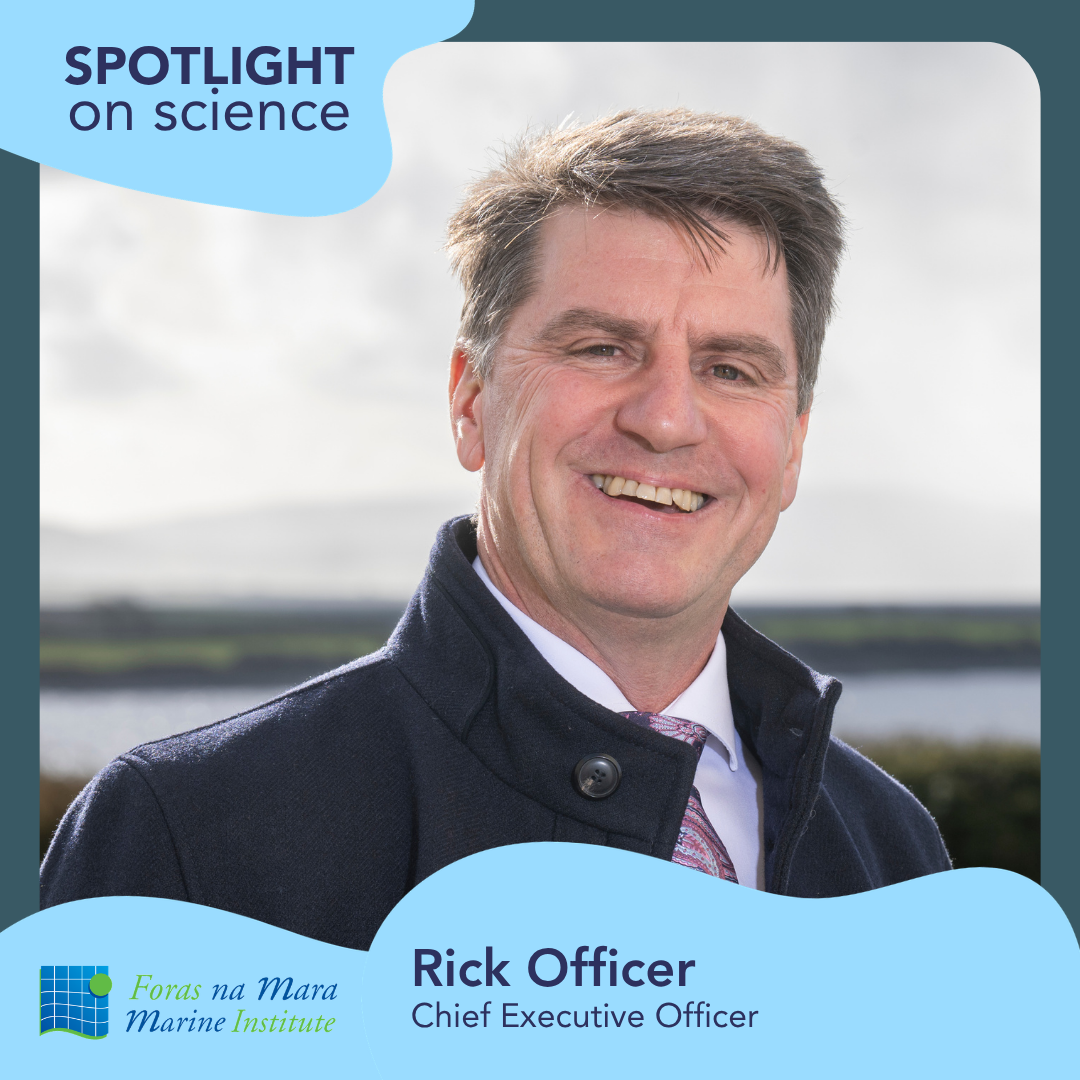
This month, Dr Rick Officer, CEO of the Marine Institute, highlights what the recently published Annual Impact Report 2025 reveals about a year in the life of the organisation and the many ways its work is making a difference for Ireland's ocean, its industries and its communities.
“We’re incredibly proud of our role in supporting Ireland’s marine and maritime sectors, from delivering cutting-edge science and expert advice to protecting our marine environment,” he says.
“By reporting on our impacts each year, we demonstrate our accountability and the tangible benefits our work delivers for the government, industry and society.”
This year's report tells that story across a wide range of outcomes: from new genetic science that has restored access to a valuable herring fishery, to real-time ocean data that helped protect lives during Storm Éowyn using real-time data from the Irish Marine Data Buoy Observation Network. It highlights how detailed seabed mapping is strengthening Ireland’s marine knowledge base and enabling effective marine spatial planning and the most appropriate location of offshore renewable energy developments.
The report also shows how timely expert policy advice helped to mitigate disruption caused by the Port of Holyhead closure, while long-term ocean climate surveys continue to build critical insights into a changing Atlantic.
Key Highlights
Some key highlights for the Marine Institute include:
Ensuring Food Safety through the Marine Institute’s Seafood Safety Programme
The Marine Institute's Shellfish Safety Monitoring Programme rigorously tests Irish shellfish to ensure they are safe to eat. In 2025, around 2,500 shellfish samples were tested for marine biotoxins, while a further 1,000 samples were checked for bacteria and viruses. An additional 3,500 water samples were analysed to monitor for harmful algae. The Marine Institute also continued its EU-approved programme testing farmed fish for chemical residues. Together, these programmes ensure Irish seafood meets the highest food safety standards and help maintain public confidence in Irish shellfish products.
Increasing data accessibility and transparency with online sea lice monitoring dashboard
Sea lice are small parasites that can affect both farmed salmon and wild fish populations. The Marine Institute carries out regular inspections across Irish salmon farms and publishes the results monthly. In 2025, the Institute launched an online dashboard that makes this data freely available and easy to explore. Users can view monthly lice counts for each farm and track how sea lice levels have changed over time. By making this information openly accessible, the dashboard improves transparency for the public, supports regulators in their decision-making, and helps the aquaculture industry manage sea lice more effectively.
Supporting Sustainable Fisheries with Scientific Stock Assessments
Through surveys, sampling and fish catch monitoring throughout 2025, the Marine Institute's Fisheries, Ecosystems and Advisory Services (FEAS) team assessed the health of Ireland's key fish stocks using the best available science. This work helps the fishing industry make informed decisions, manage harvests sustainably, and protect the long-term future of one of Ireland's most important economic sectors.
Enabling a Transition to Low-impact Fishing While Supporting Coastal Livelihoods
Crayfish fishing off Ireland's southwest coast using tangle nets was found to be accidentally catching critically endangered and legally protected species. The Marine Institute's FEAS team investigated the scale of the issue, studied how these species use the area, and trialled alternative fishing methods. The research confirmed that the bycatch was significant. Trials with low-impact trap-based gear showed that a transition to more sustainable fishing methods was possible without putting jobs in the seafood sector at risk.
Research Vessel Fleet Reduces Carbon Emissions and Energy Usage
The Marine Institute introduced several initiatives during 2025 to reduce energy and carbon emissions on Ireland’s marine research vessels, the RV Tom Crean and RV Celtic Explorer. One example is the increased use of Hydrotreated Vegetable Oil (HVO) as a low carbon replacement fuel on the vessels, following a successful trial in 2024. In 2025, a combined reduction of 36% in carbon emissions was achieved across the two vessels, resulting in savings of 2,141 tons of CO₂.
Together, these highlights and case studies demonstrate science in action, supporting livelihoods, informing decisions, and safeguarding the sustainable development of Ireland's marine resources.
View the Marine Institute Annual Impact Report 2025
This article first appeared in The Marine Times (May 2026).