
Ireland's annual fish stock health check
Each month, an expert from the Marine Institute will shine a light on their area of work, sharing insights on our ocean knowledge. As the national agency responsible for supporting the sustainable development of our marine resources, the Marine Institute delivers scientific knowledge, expert advice and services to government, industry and a wide range of stakeholders.
This month, Jonathan White, Section Manager of Fisheries Services at the Marine Institute, explores the science and data behind the Stock Book, the Institute’s flagship annual assessment of Ireland’s fish stocks and fisheries resources.

Ireland's Annual Health Check for Fish Stocks
Every year, fisheries scientists at the Marine Institute compile one of the most influential publications about Irish fishery resources: the Stock Book. Published since the late 1990s, it brings together the latest scientific evidence on the state of fish stocks around Ireland and helps inform management decisions for these valuable marine resources.
The Stock Book covers 74 commercially important fish and shellfish stocks and explains what scientists know about their abundance, how fish populations are changing over time, and what catch levels are sustainable.
For more than 28 years, the Stock Book has served as a bridge between science, policy and industry. Published every November, it provides an impartial and objective assessment of fishing opportunities for the year ahead, distilling a vast body of scientific evidence into accessible advice.
A key role of the Stock Book is to review and interpret fisheries advice developed through the International Council for the Exploration of the Seas (ICES). ICES is an intergovernmental marine science organisation that provides independent scientific evidence on the state and sustainable use of our seas and oceans. Many Marine Institute scientists play an active role in ICES assessments and advisory processes, helping to advance scientific understanding of marine ecosystems and shape advice that supports conservation, sustainable fisheries and effective marine management.
Released ahead of the annual EU Agriculture and Fisheries Council in December, the Stock Book helps inform Irish policymakers as negotiations begin on Total Allowable Catches (TACs) and national quotas for the Northeast Atlantic. The publication outlines Ireland's position across key stocks and highlights areas where there may be opportunities for a management intervention and future development.
For the fishing industry, the Stock Book offers far more than a snapshot of stock status. It explains how TAC recommendations are developed, provides insights into the biology and ecology of commercially important species, and tracks how fish populations have changed over time. This helps the fishing community understand both the scientific basis for management decisions and the outlook for these wild natural resources. The publication is widely used by government departments, environmental NGOs, universities and researchers as a trusted source of objective information on the condition of Ireland's marine resources.
Behind each edition lies a year-long scientific effort by the Marine Institute's Fisheries Ecosystems Advisory Services team (FEAS). Scientists collect data from commercial fishing vessels, ports and harbours, analyse fish ages from otoliths (ear bones), and conduct extensive research surveys at sea, gathering also environmental and oceanographic data as well as records of benthos and non-commercial species catch.
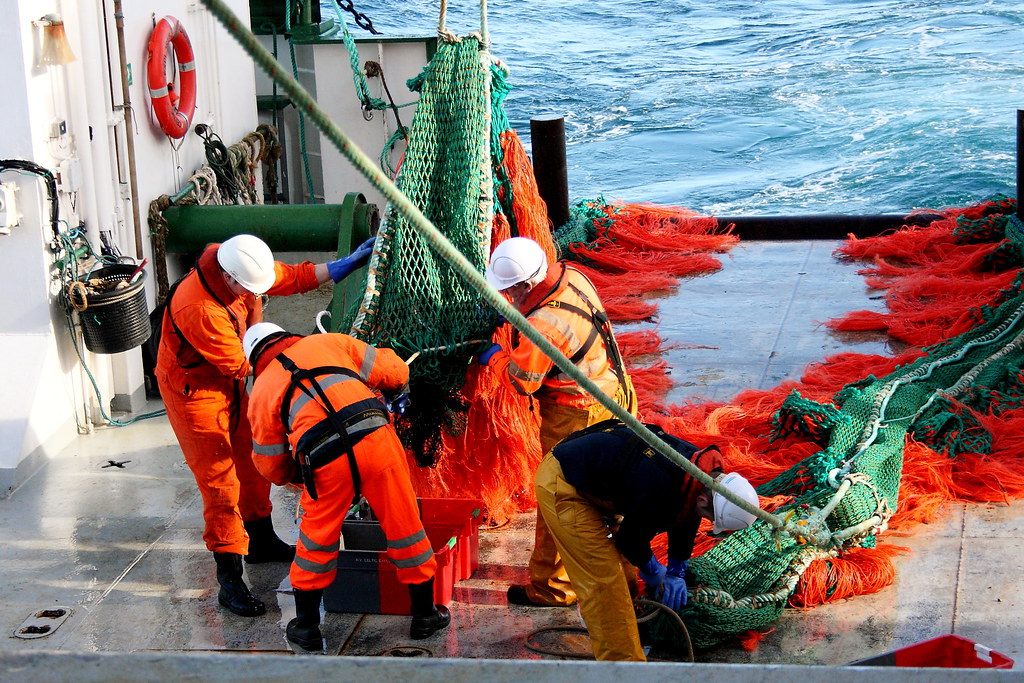
Each year FEAS processes between 35,000 to 40,000 otolith readings, and ~80,000 - 100,000 fish are weighed and measured through ~300 - 400 port visits, around 40 commercial fishing trips, and about 230 research survey days (amounting to around 1500 person days at sea). This data gathering in Irish waters from the West of Scotland, around the West of Ireland, the Celtic Sea and into the Irish Sea, represents not only the key annual record of fisheries information and data, but also a record of the state and history of the marine ecosystem around the country.
Fish stocks are wild and constantly moving, so understanding their status is a complex scientific challenge. The work of Marine Institute scientists throughout the year, collecting the necessary samples, data and information from ports, scientific surveys and accompanying commercial fishing trips is crucial to the stock assessment process, with each element playing an essential role in the stock assessment process.
Together, these data help scientists estimate historical and current fish populations, including demographics: their size, age structure, growth rates, reproductive potential, and overall size of the spawning and catchable stock.
The Stock Book now also provides valuable insights into how climate change is affecting Ireland's marine environment. Recent analyses show that warming waters and more frequent and intense marine heatwaves are altering the productivity of some fish species. Traditional cold-water species such as cod, haddock, and whiting are becoming less productive in their southern distributions, while warm-water species, including anchovy and octopus, are increasingly being observed in Irish waters.
These changes may have important implications for the future of Irish fisheries. As established commercial species face new pressures, emerging species could present new opportunities. Tracking these trends is a vital part of ensuring that fisheries management can adapt to a changing ocean.
More than an annual report, the Stock Book represents the culmination of a year of fisheries science. From port sampling and scientific surveys to stock assessments and international collaboration through ICES, it brings together the evidence needed to safeguard fish populations and support sustainable fisheries. By translating complex science into practical advice, the Stock Book continues to play a crucial role in informing fisheries management, supporting coastal communities and helping Ireland navigate the challenges and opportunities facing its marine resources.
The 2026 edition of the Stock Book will be published in November, continuing a long tradition of providing the scientific evidence needed to support sustainable fisheries management in Ireland and across the Northeast Atlantic.
The 2026 edition of the Stock Book will be available on the Marine Institute website at marine.ie and the online open access repository.
This article was originally published in the Marine Times ( November 2026).