
Catch with care: A just transition for crayfish fishing
Each month, an expert from the Marine Institute will shine a light on their area of work, sharing insights on our ocean knowledge. As the national agency responsible for supporting the sustainable development of our marine resources, the Marine Institute delivers scientific knowledge, expert advice and services to government, industry and a wide range of stakeholders.
This month, Oliver Tully, Fisheries Scientist with the Marine Institute, highlights some of the work undertaken in collaboration with the fishing industry in north Kerry to explore how a transition to low-impact pot fisheries for crayfish (spiny lobster; Palinurus elephas) could be developed.
Understanding the history of the fishery
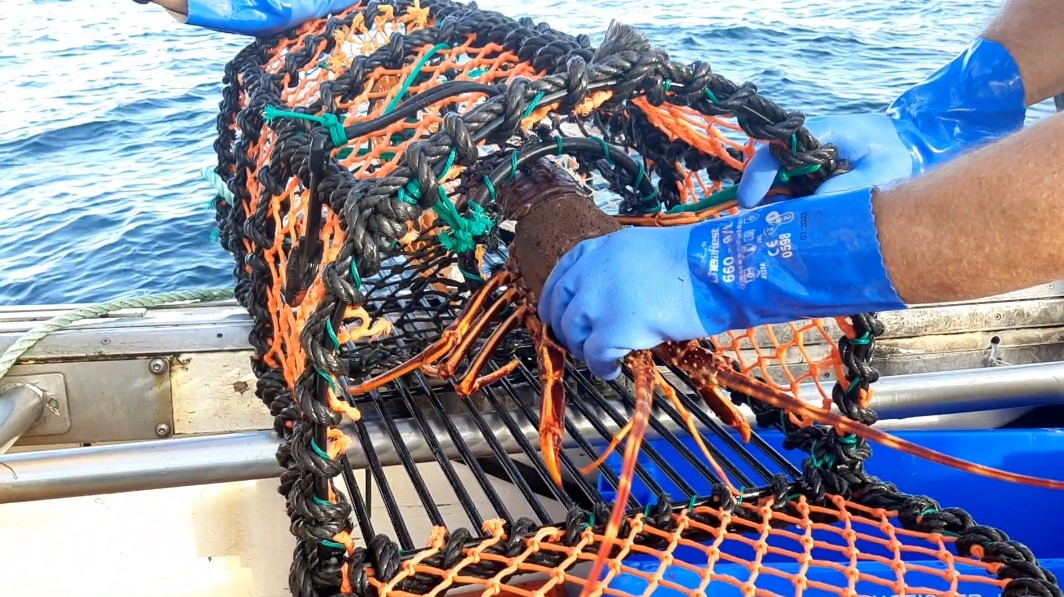
The spiny lobster, commonly known in Ireland as crayfish or crawfish (Palinurus elephas), is a large crustacean distinguished by its small front claws and striking orange colouring, often with purple tinges. Valued for its tail meat, crayfish is an important species for Ireland’s inshore fishing fleet, particularly on the west and south coasts. Ireland lies at the northern limit of the commercial range for this species, although it is found as far north as Norway.
Since the 1950s, the crayfish fishery in Ireland has gone through significant fluctuations, with landings ranging from over 150 tonnes in some years down to 20 tonnes in others.
Crayfish were traditionally caught using top-entry traps handmade by fishermen from willow (sally) rods woven onto a timber frame. Progressively, from the 1950s to the 1970s, these were gradually replaced by the French wooden barrel pots. By the late 1970s, tangle nets increasingly became the standard fishing method.
Tangle nets can be left in the water for several days, accumulating the catch of crayfish over time. This infrequent hauling means that fishermen can operate several sets of gear at once and combine it with pots for lobster and crab.
Tangle nets, however, are not selective and can catch a wide range of species. While some of these species have commercial value, such as lobster, crab, turbot and monkfish, many others don’t have commercial value and may be endangered, such as Angel shark and some species of skates and rays. This by-catch is a significant concern in some areas. In addition, more than 95% of the current catch value is derived from crayfish alone, likely reflecting declines in other commercially important species in recent years.
Can a transition to low-impact fishing be economically viable?
Reverting to the use of pots could eliminate the by-catch of endangered species in the crayfish fishery. If pot fishing was viable in the past, could it provide a sustainable alternative in the future? What associated benefits would this bring, and what actions would be needed to enable a ‘just transition’, ensuring the change is fair and practical for fishermen?
To answer these questions, in 2021 the Marine Institute set up a collaborative research project with commercial fishermen operating in outer Tralee Bay south to the Blasket Islands. Fishing trials were carried out to compare the catches and catch rates in crayfish pots and tangle nets, and to evaluate the gross economic value of the landings for standard amounts of nets and pots. The team also estimated relative depreciation and maintenance costs for tangle nets and pots over a 5-year scenario. A full report of the trials will be available from the Institute in August 2026.
The pot fishing trials were designed to replicate the fishing practices used before the adoption of tangle nets in the 1970s. Pots were hauled up to three times per day to reduce the escapement of crayfish after the bait was consumed. Although various pot designs were tested, the main pot used in the trials had no parlour (second chamber) or other features to reduce escapement. This approach was adopted with a view of what pot fishing in the future would look like: Because the pots need to be hauled frequently, it would naturally limit the number of pots an individual fisherman could operate effectively and, therefore, limit competition with existing lobster and crab fisheries.
The results of this trial showed that the gross value of the landings for a given amount of pot fishing effort was up to 50% of the value of nets in 2024-2025. However, the value of crayfish in pot fishing was at least 80% of the value of the commercial pot fishery for lobster and crab in the same area. Additionally, the analysis also found that the five-year maintenance and replacement costs associated with tangle nets were more than twice those of pots. So, while tangle nets outperformed pots, the trials showed that potting for crayfish can be economically viable during the summer months, relative to the lobster fishery, for example.
There are also other positive aspects to pot fishing. Most importantly, bycatch of endangered species is not an issue in pots. Mortality of crayfish, including undersised crayfish, in nets can be 10-20%, resulting in the loss of valuable catch before it reaches the market. Pots also catch fewer juvenile crayfish that have not reached the legal minimum landing size and therefore minimises negative effects on future recruitment to the fishery.
The trials were undertaken in areas where the experimental pots were used alongside nets. Both gears compete for crayfish in this case. Therefore, the catch rates in a dedicated pot fishery in the future would be expected to be higher if tangle nets were not operated in the same area.
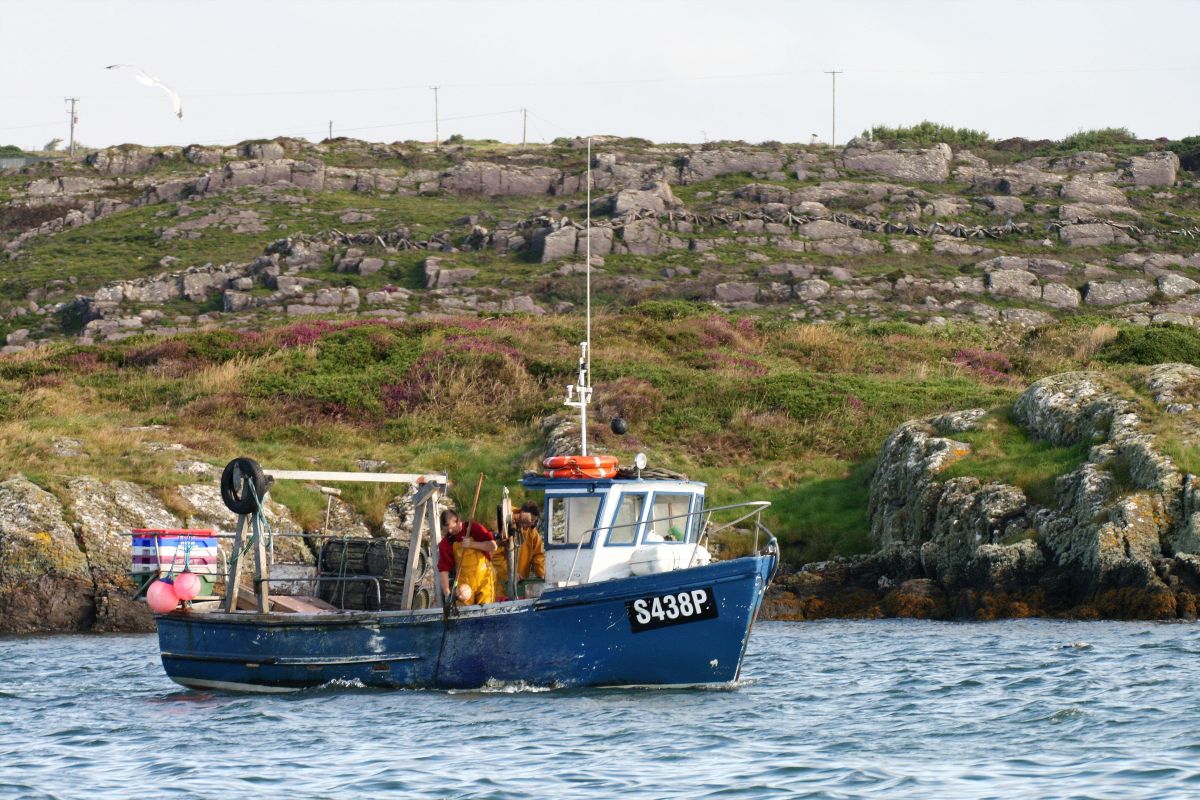
Management of the stock to maintain crayfish populations at high biomass levels would also be important in increasing the viability of pot fishing. This is a key principle with other pot fisheries, where focusing on sustaining high stock abundance is more effective than chasing declines in catch rates with more fishing effort. The successful pot fisheries for crayfish historically had that one advantage: there were more crayfish on the fishing grounds than there are today. Rebuilding and maintaining stock abundance would therefore be a critical factor in supporting the just transition to a low-impact, economically viable pot fishery.
Importance of low-impact fishing for the fishing industry
Protecting biodiversity in the marine environment from the impacts of human activity is, today, more important than ever, and this priority is articulated in Ireland’s national and EU policies and directives.
The fishing industry’s collaboration with the Marine Institute on the crayfish project and potting trials is an important step in finding a solution to reducing the by-catch, while maintaining a viable fishing business. The project demonstrated how scientists and fishermen can work together to find solutions that support a ‘just transition’ to low-impact fishing. That just transition should balance the needs of local communities with environmental objectives, protecting fishermen’s jobs and their socio-economic and cultural contribution to coastal economies in areas such as north Kerry.
More broadly, the move towards low-impact fishing will require proactive support from the fishing industry and the fisheries management and conservation authorities alike. Working together will be essential to ensure future sustainable and viable fisheries, to comply with regulations and to reflect the will of Irish civil society, articulated in the Recommendations and Report of the Citizens’ Assembly on Biodiversity Loss, that marine biodiversity protection is not just an aspiration but a key area for action.
The crayfish monitoring project – making an impact
The Marine Institute’s crayfish project demonstrates how targeted research funding and practical, industry-led actions can deliver collaboratively developed solutions to real-world challenges. It provides a blueprint for a just transition to low-impact fishing that balances economic and environmental objectives. Reducing by-catch helps protect endangered species, while supporting healthier marine ecosystems and sustainable fish populations, all of which are foundational to a thriving fishing industry.
The crayfish monitoring project was funded by the European Maritime and Fisheries Fund (2018-2020) with funding continuing under the European Maritime, Fisheries and Aquaculture Fund (2021-2026) and the Irish Government.
This article first appeared in The Marine Times ( August 2026).
