
New report reveals extent of genetic introgression in wild Irish salmon populations
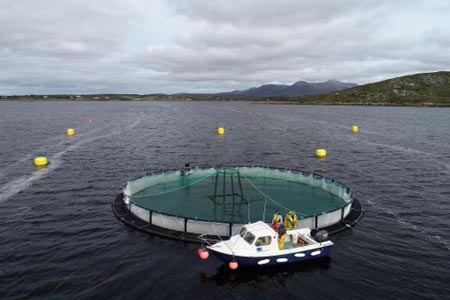
The Marine Institute today welcomed the publication of a new report providing the first comprehensive assessment of genetic introgression from escaped farmed salmon into wild Atlantic salmon populations in Ireland. The study, led by University College Cork (UCC) in collaboration with Inland Fisheries Ireland (IFI) and Teagasc, represents the most extensive analysis of its kind undertaken in Ireland.
Commissioned to inform aquaculture regulation, environmental assessment, and licensing decisions, the research analysed DNA from 6,322 juvenile salmon sampled at 166 sites across 133 river populations between 2023 and 2025. These data were complemented by 1,755 historical samples from 61 rivers collected between 2003 and 2008.
The findings show no evidence of genetic mixing with farmed fish in approximately two-thirds (66%) of wild salmon populations in this study. Where it was detected the levels of introgression were generally low (27% of populations) to moderate (6% of populations) with higher impacts observed in a small number of samples (0.8% of populations). These various levels of impact were observed in areas near marine net-pen aquaculture sites and freshwater rearing facilities but also in areas where no aquaculture activity is present, indicating that genetic mixing is not exclusively confined to regions with direct farm exposure.
Dr Ciaran Kelly, Director of Fisheries and Ecosystem Advisory Services at the Marine Institute, emphasised the importance of the findings: “This project represents a major step forward in our understanding of a key pressure on Irish wild Atlantic salmon populations. By applying cutting-edge genetic tools, we can better assess interactions between farmed and wild fish and ensure that management decisions are supported by robust scientific evidence. This is essential to safeguarding biodiversity and maintaining public and stakeholder confidence in Ireland’s salmon aquaculture sector.”
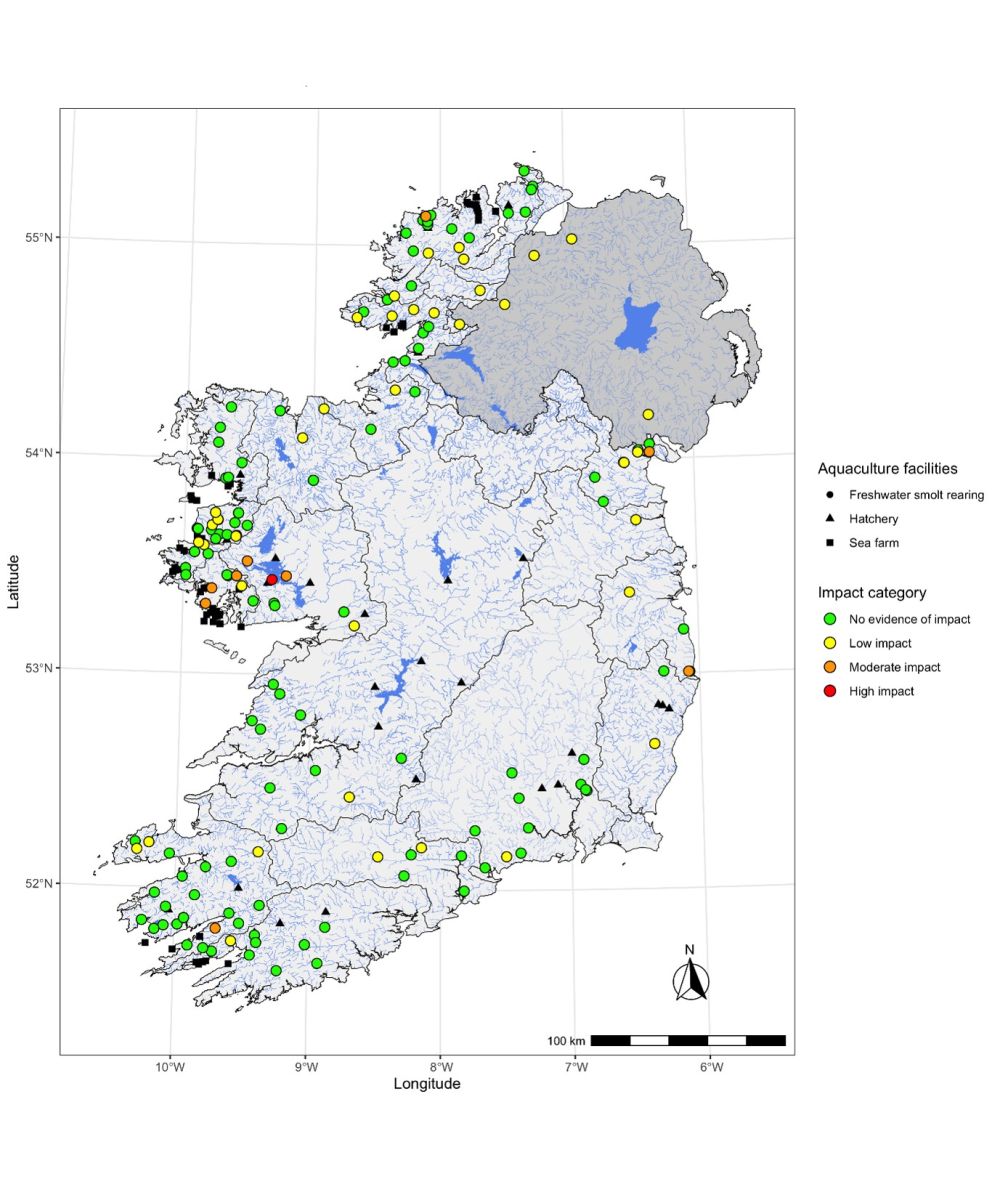
Levels of introgression in Ireland are lower than those reported in for example a major salmon-producing country such as Norway, however the fact that introgression has been detected (albeit it, mostly, at a relatively low level) means that escapes from farmed fish remain a potential source of genetic interaction with wild stocks. Consequently, effective measures in preventing escapes will play an important role in protecting the genetic integrity of wild populations. The results provide a critical evidence base to inform future regulation of marine finfish aquaculture, and guide future research and management actions.
Professor Philip McGinnity of UCC, who led the study, highlighted the long-term significance of safeguarding Ireland’s wild salmon: “Ireland’s Atlantic salmon populations represent a unique and irreplaceable 15,000-year legacy from the last Ice Age. Gene flow from escaped salmon has the potential to be a powerful evolutionary force. Any fundamental change to the genetic makeup of these populations could seriously hamper their capacity to evolve and adapt to future challenges, including those associated with global warming.”
The report confirms that escaped farmed salmon can interbreed with wild salmon in Irish rivers, resulting in genetic introgression. Existing research indicates that this can reduce the fitness of wild populations by weakening locally adapted traits, potentially affecting their resilience to environmental change. To further understand these impacts, the project is being extended for an additional twelve months to assess whether salmon that escaped during the well-publicised Killary Harbour incident in 2024 spawned and produced hybrid offspring in the wild.
The report highlights the importance of continued vigilance and outlines key recommendations, including:
• Ongoing national genetic monitoring of wild salmon populations
• Rapid-response sampling following escape events
• Improved identification of escape sources
• Further research into long-term impacts of gene flow on population health and productivity
The study was undertaken under the Marine Biodiversity Programme 2021–2027 and administered by the Marine Institute. Funding was provided through the Department of Agriculture, Food and the Marine’s Operational Seafood Programme, co-funded by the EU European Maritime, Fisheries and Aquaculture Fund (EMFAF).
The Marine Institute is committed to supporting high-quality research that underpins sustainable marine resource management and the protection of Ireland’s natural heritage.
Link to Report – An assessment of the level of genetic introgression in Irish wild salmon populations from farmed escaped salmon (GeneFlow)

ENDS
For more information, please contact:
Kathleen Sweeney, e. Kathleen.Sweeney@marine.ie m. +353 (0)87 094 5754
Sinéad Coyne, e. sinead.coyne@marine.ie m. +353 (0)87 947 7090
Communications Office, Marine Institute communications@marine.ie t. +353 (0)91 387 200
About the Marine Institute:
The Marine Institute is Ireland’s scientific agency responsible for supporting the sustainable development of the State’s maritime area and resources. The Institute conducts applied